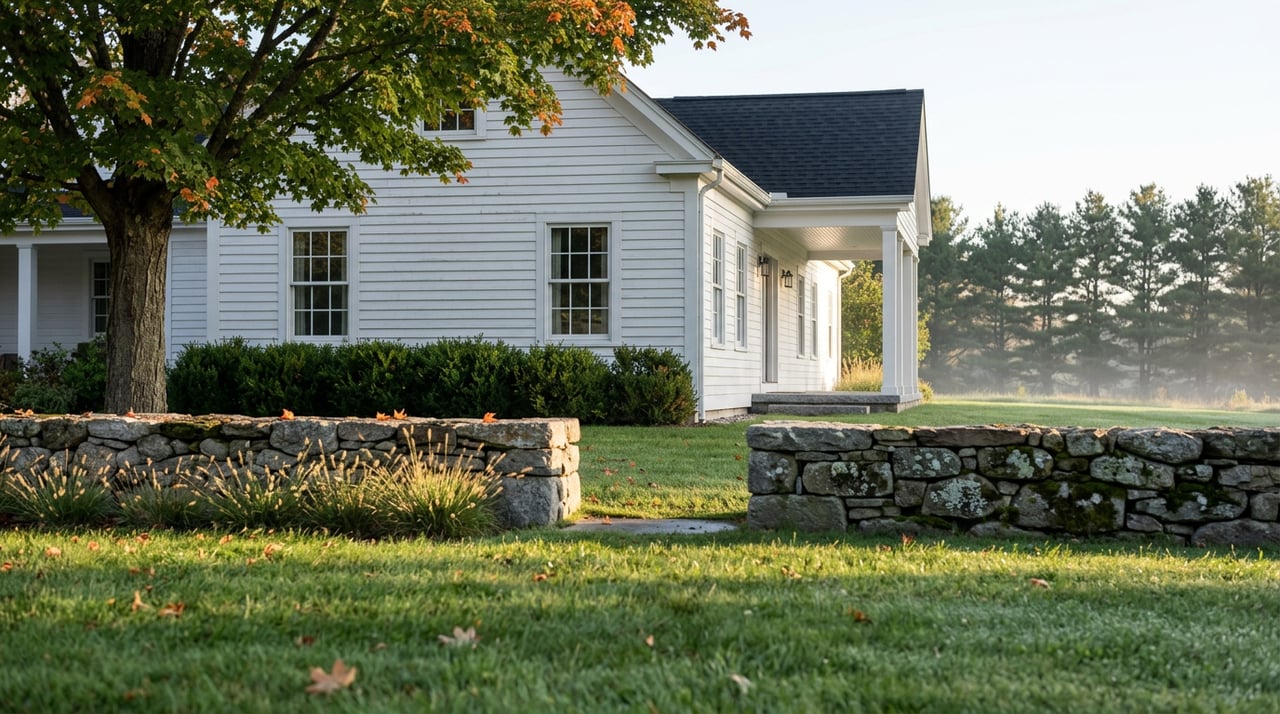
On August 18, 2026, a handful of Cumberland residents sat through a pre-application workshop for a piece of land most of them had driven past for years without a second look. The parcel at 250 Blanchard Road is 22 acres, has a farmhouse on it, and is owned by an entity called ME Seacoast Homebuyers LLC. The proposal on the table, prepared by Northeast Civil Solutions and presented by land surveyor Troy McDonald, called for five lots. Five is the minimum number of lots that qualifies a project as a "major" subdivision in Cumberland, which tells you something about how carefully this one was drawn.
Denison Gallaudet, who chairs Cumberland's Lands and Conservation Commission, stood up and made a case that the 22 acres held three separate high-value conservation areas: more than five contiguous acres of prime agricultural land, a significant wildlife habitat, and a stand of healthy native forest. He asked the developer to cluster the lots more tightly so those areas could stay intact. "The development is remarkable in its abundance of high-value conservation areas," he told the board.
That sentence is the whole story for anyone thinking about buying or selling rural land in Cumberland this year. Twenty-two acres on a listing sheet and twenty-two acres you can actually build on are two different numbers, and the gap between them is where Cumberland's real estate math gets interesting.
The Ordinance That Decides What "22 Acres" Really Means
Cumberland's zoning code requires conservation subdivisions in the town's Rural Residential districts to set aside at least 50 percent of the tract as permanent common open space, calculated using a net residential acreage formula rather than the raw lot size. On top of that, any subdivision fronting Tuttle, Greely, Blanchard, or Foreside Roads has to leave a 150-foot buffer along the road, well beyond the standard 75-foot requirement everywhere else in town.
This is not a new fight for Cumberland's Planning Board. Earlier in 2026, the board took up an 18-acre parcel off Staples Road, near three existing tracts of conservation land. Former town planner Josh O'Neill, now a Planning Board member, opposed the project, arguing the land was too important to the town's remaining forestland to subdivide as proposed. Board member Chris Butler saw it differently: the land was already zoned to allow building, and "the town can't deny that right that the town has already effectively given." The board approved the project 4-2, with conditions, cutting what could have been nine lots down to four buildable ones.
Two different parcels, two different boards, one and the same math. When Cumberland's own comprehensive plan warns about "gradual parcelization," it is describing exactly this pattern: raw acreage getting whittled down, lot by lot, hearing by hearing, until what a buyer or seller is actually transacting in is not acreage at all. It is buildable yield.
Why That Distinction Should Change How You Read a Cumberland Listing
If you are looking at land in Cumberland's rural interior, the price per acre on a listing tells you almost nothing until you know what the parcel's actual yield looks like after conservation subdivision requirements are applied. A 20-acre farm parcel that nets four buildable lots is not competing on price with a 20-acre parcel that nets eight. They are different products wearing the same acreage number.
That is also why current-use tax enrollment matters more here than in towns without this kind of interior farmland. Cumberland County administers Farmland, Open Space, and Tree Growth current use programs that reduce a landowner's property tax bill by valuing the land at its agricultural or forestry use rather than its market value. It is a real benefit for someone holding acreage. It is also a real liability at the moment of sale or development. Pull land out of the Tree Growth program and the penalty runs between 20 and 30 percent of the gap between the program value and market value. Pull land out of Farmland classification and you owe five years of back taxes at the rate you would have paid without the exemption, plus interest. A seller who has enjoyed a lower tax bill for a decade can walk into closing and discover that bill is coming due all at once.
None of this shows up in a headline median price. It shows up in the closing statement.
Meanwhile, the Foreside Is Playing an Entirely Different Game
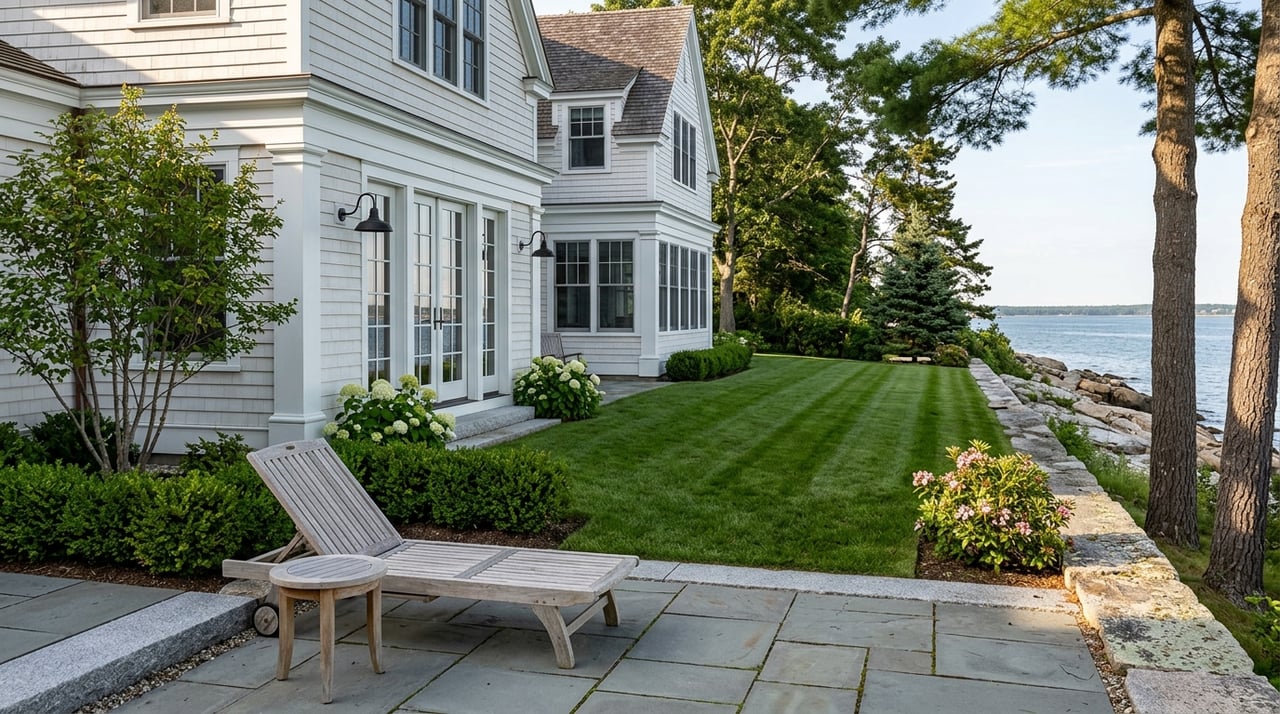
Cumberland Foreside is not subject to any of this. It is walkable, mostly built out, and priced on proximity to Casco Bay rather than on how many acres of open space a subdivision has to preserve. In June 2026, homes listed in Cumberland Foreside carried a median price near $1.79 million, working out to roughly $264 per square foot. Compare that to town-wide Cumberland, where September 2026 listings carried a median price of $615,000, a figure that had actually softened from the previous year. A separate market report from earlier in 2026 put Cumberland's town-wide median closer to $830,000, a reminder that these figures move with the season and the specific mix of homes on the market at any given moment, not just with some single, fixed number.
| Cumberland Foreside | Rural Cumberland interior | |
|---|---|---|
| What actually sets the price | Proximity to Casco Bay, walkability, existing lot | Net buildable lot yield after conservation open-space set-aside |
| A 2026 data point | Median near $1.79M (June 2026 listings) | Town-wide median $615K (Sept 2026) to $830K (early 2026 report) |
| Zoning friction | Minimal, largely built out | RR1/RR2 conservation subdivision rules, 50% open space minimum, road buffers |
The spread between those two columns is not market noise. It is two different pricing logics sitting inside the same town line. A Foreside buyer is paying for something that is already finished: a lot, a view, a short walk to the water. A buyer or seller working with Cumberland's interior acreage is negotiating over something still being determined, lot by lot, at the Planning Board.
What This Means If You're Looking at Land Here
For a buyer eyeing acreage in Cumberland's rural zones, the number that matters is not price per acre. It is price per net buildable lot, once conservation subdivision requirements are applied. Before making an offer on a larger parcel, it is worth asking:
- How many lots does this parcel's zoning district and lot size actually support once open space set-asides are applied?
- Does the parcel front Tuttle, Greely, Blanchard, or Foreside Road, where the buffer requirement doubles to 150 feet?
- Is any part of the land currently enrolled in Farmland, Open Space, or Tree Growth, and what would withdrawal cost?
For a seller holding a larger parcel, the Blanchard Road and Staples Road hearings are a useful preview of what a Planning Board will ask before a subdivision gets approved. A zoning and yield analysis done ahead of listing, not after an offer comes in, tends to produce a cleaner number and a smoother path to closing.
A Few Questions Worth Asking Before You Value Land Here
Does every large lot in Cumberland trigger a conservation subdivision review? Only parcels in the Rural Residential 1 and 2 districts, and only once a project reaches five lots, the threshold Cumberland's code uses to define a "major" subdivision. Smaller splits and land in other zoning districts follow different rules.
Is Cumberland Foreside land subject to the same open space requirements? No. Foreside sits in a different zoning district built around existing, mostly developed lots along Casco Bay, which is why its pricing behaves so differently from land in the town's rural interior.
Cumberland has always been two towns wearing one name, a coastal Foreside and a working rural interior, and the Planning Board hearings happening right now are the clearest evidence of how differently those two halves get valued. If you are trying to figure out what a specific parcel here is actually worth, or what a farmhouse property could support once the zoning math is applied, Linda MacDonald and her team can walk the numbers with you before you write an offer or set a list price. Request a complimentary home valuation to start with a clear picture of what your land, or your next purchase, actually delivers.