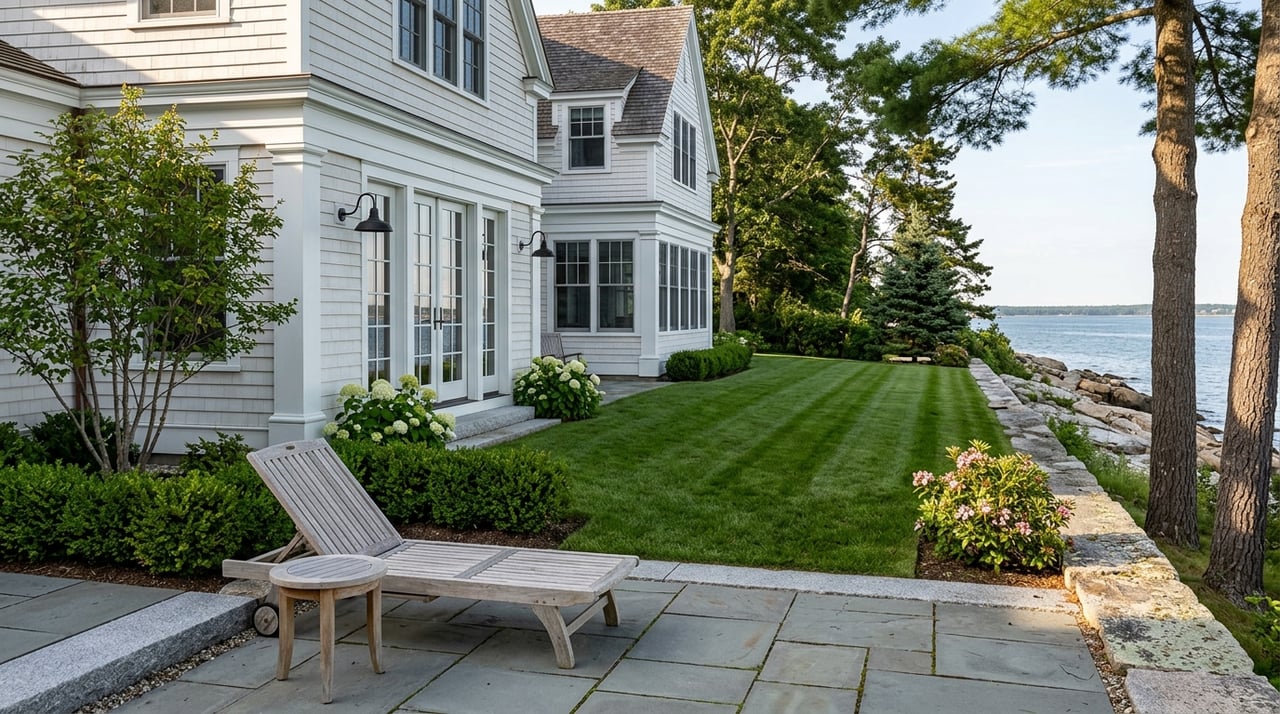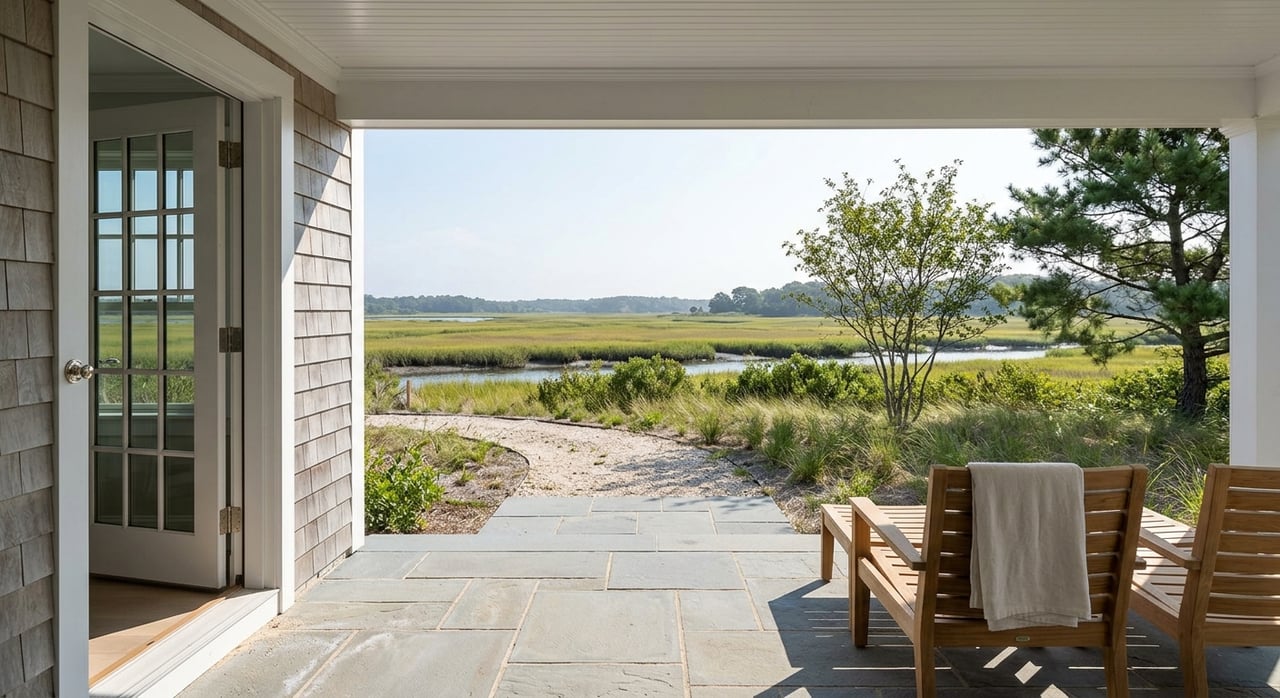
Buying waterfront in South Portland can feel like finding the best of Maine in one address. You may picture harbor views, a private float, or easy access to Casco Bay. But waterfront due diligence here goes far beyond the view. Before you buy, you need to confirm what kind of waterfront access you are actually getting, what the city and state allow on the site, and how flood and resilience rules could affect long-term value. Let’s dive in.
Know what “waterfront” really means
In South Portland, not all waterfront property offers the same type of use. Some parcels have shoreline frontage but no practical dockage. Others may offer tidal access, a launch option, or proximity to public boating facilities rather than private deepwater use.
According to the City of South Portland waterfront information, boaters can access Portland Harbor and Casco Bay through the Fore River Boat Facility at Bug Light Park and Knightville Landing. The city also notes strong currents near the Casco Bay Bridge, warns that boats should not dock or undock during bridge openings, and states there is at least six feet of water along the floats at mean lower low water. Those details matter because they show how local water access can be very site-specific.
If you are buying for boating, one of the first questions should be simple: Is this frontage scenic, tidal, launchable, moorable, or truly dockable? That distinction can affect price, use, and future resale.
Ask about access in writing
You should verify any claimed water access with documents, not assumptions. If a listing mentions a mooring, float, landing, or easement, ask for the supporting paperwork early in the process.
Maine law gives the harbor master authority over mooring assignments, and a mooring assignment under Maine statute does not create ownership rights in submerged or intertidal land. The law also generally limits shorefront mooring privilege to one mooring per parcel when practicable, unless local rules provide otherwise. In plain terms, a mooring is not the same thing as owning a dock right.
Check shoreland zoning early
South Portland waterfront parcels often fall under extra zoning rules. That means your ability to expand a home, add site improvements, clear trees, or change the shoreline may be more limited than it first appears.
The city’s Shoreland Area Overlay District rules apply to land within 250 feet of the upland edge of a coastal wetland, including areas affected by tidal action. The code also says the map is illustrative and the text controls if there is a conflict. That is a good reason to confirm zoning directly with the city instead of relying only on a map screenshot.
Water setbacks vary by district
Setbacks are not one-size-fits-all. Within the shoreland overlay, South Portland uses different water setbacks depending on the underlying district, including 40 feet in some residential shoreland districts, 25 feet in the G-3 district, and 75 feet in the Shoreland Resource Protection subdistrict.
If you are thinking about additions, a new patio, stairs, or a rebuilt accessory structure, those setback rules should be reviewed before you commit. Even a property that looks spacious on paper may have a smaller practical building envelope near the water.
Permits matter for changes and repairs
The city’s Code Enforcement and building permit office handles zoning determinations, permit review, and inspections. South Portland’s code states that no building or other structure may be erected, moved, added to, or structurally altered without a building permit.
That matters for buyers because due diligence is not only about what exists today. It is also about what you will be allowed to repair, alter, or improve after closing.
Review docks, floats, and shoreline structures
One of the biggest waterfront mistakes is assuming that an existing shoreline feature is fully legal and easily replaceable. A dock, float, seawall, ramp, or landing may be old, damaged, grandfathered, partially permitted, or subject to multiple layers of review.
Maine’s Department of Marine Resources says pier, wharf, and dock projects that alter coastal wetlands, including seasonal ramps and floats below the Highest Astronomical Tide line, may require review. Its guidance emphasizes reducing impacts to wetlands and fish habitat and suggests alternatives such as shared use, an offshore mooring with dinghy haul-out, or a public access site or marina.
Shoreline stabilization can require state review
If a property includes riprap, a seawall, or an eroding bank, ask for permit history and construction records. The Maine DEP guidance on coastal shoreline work explains that activities in or near protected natural resources may need an NRPA permit. Some projects qualify for permit-by-rule, while others need a full permit.
DEP also notes that some in-kind replacement seawall or riprap work may qualify for simpler review, and certain replacements can be raised up to one foot above FEMA base flood elevation. That makes it especially important to know whether the existing structure was legally built and whether prior approvals exist.
A good buyer question is this: Is the existing shoreline improvement a legal existing structure, a permitted improvement, or something that would trigger new review before repair or expansion?
Understand tree and site restrictions
Waterfront buyers often value privacy and views, but in South Portland, tree clearing in shoreland areas is regulated. You should not assume you can open up a wider water view after closing.
The city’s Tree Protection guidance states that in shoreland areas the replacement rate is five trees for each protected tree removed. The zoning code also requires replanting or other mitigation for larger canopy openings. That means vegetation management can directly affect both design plans and future maintenance costs.
For site work, South Portland also requires erosion and sediment controls for construction, and excavation contractors working in the shoreland zone must hold Maine DEP erosion-and-sediment-control certification. If your plans involve grading, drainage work, or shoreline access improvements, this should be reviewed with your contractor and the city early.
Check flood maps before inspections end
Flood risk should be treated as part of the purchase price, not an afterthought. In waterfront transactions, insurance cost, elevation, and adaptation potential can shape affordability just as much as taxes or maintenance.
South Portland updated its floodplain rules after FEMA issued new Flood Insurance Rate Maps effective June 20, 2024. The city’s FEMA flood maps page points owners and buyers to both FEMA resources and the city GIS viewer. A parcel that seemed manageable under older map assumptions may look different under current mapping.
Flood insurance is separate from homeowners insurance
FEMA states that flood insurance is required for homes and businesses in high-risk flood areas when there is a government-backed mortgage. FEMA also notes that standard homeowners insurance does not cover flood damage and that NFIP policies usually have a 30-day waiting period.
For buyers, that creates a practical deadline. You should price flood insurance before your inspection contingency expires, not after. Premiums and coverage requirements can materially affect your monthly ownership cost.
Factor in climate resilience and long-term value
South Portland’s waterfront is beautiful, but it is also changing. Storm impacts, sea-level rise, and evolving local rules should all be part of a smart purchase decision.
The city’s Coastal Resilience program says the January 2024 storms damaged Willard Beach and Bug Light Park and accelerated resilience planning. The city’s mapping tools show potential impacts under average high tide, highest astronomical tide, and a 100-year storm using a 3.9-foot sea-level-rise scenario.
Regional science points the same way. The Maine Geological Survey sea-level rise overview notes that Portland’s long tide-gauge record shows about 7.6 inches of sea-level rise per century since 1912, and state planning guidance recommends preparing for 1.5 feet of rise by 2050 and 3.9 feet by 2100.
Re-check rules before closing
South Portland is still updating its coastal rules. As of February 2026, the city was finalizing a Coastal Resilience Overlay Zone, which means a long contract period could overlap with regulatory changes.
If you are under contract for several months, it is wise to confirm the parcel status again shortly before closing. That extra step can help you avoid surprises related to setbacks, floodplain review, or future improvement limits.
A practical due diligence checklist
If you are considering waterfront property in South Portland, use this checklist before you move past contingencies:
- Confirm whether the frontage is tidal, dockable, launchable, or primarily scenic.
- Verify any mooring assignment, easement, float right, or landing access in writing.
- Check the parcel on the current FEMA map and the city GIS viewer.
- Ask the city about shoreland zoning, setbacks, permit history, and allowed improvements.
- Review whether existing docks, floats, seawalls, or shoreline structures were legally permitted.
- Ask about tree-clearing limits and required mitigation in shoreland areas.
- Price flood insurance early and factor it into your total ownership cost.
- Re-check local resilience rules if the closing timeline is extended.
The right waterfront property can be a remarkable investment in lifestyle and long-term enjoyment. In South Portland, the strongest value often comes from a combination of legal access, sound permitting history, manageable flood exposure, and realistic options for future adaptation.
If you are weighing a waterfront purchase and want a thoughtful local perspective, Linda MacDonald offers boutique guidance rooted in Greater Portland market knowledge and careful property evaluation.
FAQs
What should buyers verify first about South Portland waterfront property?
- You should first verify what kind of waterfront access the property actually offers, such as scenic frontage, tidal access, dock potential, or a mooring opportunity.
Do South Portland waterfront homes automatically include dock or mooring rights?
- No. A waterfront parcel does not automatically include usable dockage or transferable mooring rights, so those details should be confirmed in writing.
How do shoreland zoning rules affect South Portland waterfront buyers?
- Shoreland zoning can affect setbacks, additions, tree clearing, site work, and shoreline improvements, which may limit what you can change after closing.
Why should South Portland buyers check flood maps before closing?
- Updated FEMA maps and local floodplain rules can affect insurance costs, financing requirements, and future renovation options.
Can existing seawalls or docks on South Portland property always be repaired or replaced?
- Not always. Buyers should confirm whether those structures are legal existing improvements and whether repair or replacement would require city or state permits.